Thursday, 21 February 2013

Good Companions & Mortal Enemies


No fighting in the ranks!
As gardeners we cannot be on patrol all day every day to keep pests at bay. Encouraging wildlife into the garden is one step to help, another is companion planting. It is a concept many people are familiar with but don't always put into practice. Companion planting works in different ways, growing plants which deter pests, or those which attract pests away from the crops or encourage beneficial insects which will feed on the pests either as adults or larva as well as pollinating crops. However some care needs to be taken because there are some plants which should never be grown together.

Some of the most well known combinations are French Marigolds among the tomatoes, they exude a strong odour which repels aphids (and me!). Alternatively you could plant Basil with the tomatoes because it attracts whitefly away from the tomatoes. Herbs make very useful companions around the vegetable patch, something obviously known by those who cultivated pottager gardens with their wonderful mixes of flowers, herbs and vegetables. Some of the most useful are Coriander to repel aphids; Marigolds (Tagetes) also repel nematodes as well as aphids; Mustard is a trap crop to attract pests away from crops; Yarrow attracts hoverflies which prey on aphids. Those are multi use herbs which will grow happily with most plants.

Artichokes keeping watch
Others work well for specific platnts; Cabbages can be protected by Chamomile, Dill, Hyssop, Mint, Nasturtium, Oregano, Rosemary, Sage, Southernwood or Thyme (not necessarily all at once!). Beans benefit from planting Bay, Petunias (not what I would call a herb), Rosemary or Summer Savoury. Carrot root fly can be deterred by planting Rosemary, Chives, Sage or Wormwood nearby. It seems that a good idea would be to grow an assortment of herbs all round the edge of the vegetable plot or allotment to give multi purpose protection for everything against everything else. Just remember to keep the Carrots away from the Dill, Alliums away from beans. Bear in mind that Hyssop dislikes Radishes, as much as Rue dislikes Sweet Basil and Cucumbers don't get along with Sage either. Of course if you are going to protect the cabbages with mint remember to keep it in a container otherwise it will take over the whole plot! Don't bother with Fennel – it dislikes nearly everything!
 
Mix in the pot not on the plot
It is not only some herbs and vegetables which don't get along, there are some vegetable combinations which should never be grown together. This is largely because at least one party involved will give off chemicals from their roots or foliage which the other does not like. This usually means that seeds may not germinate or growth will be inhibited. One of the big incompatibilities are all legumes with all alliums. Other common enemies are Cucumber and Potatoes or aromatic herbs; Potatoes and Squashes, Tomatoes or Sunflowers; Tomatoes also dislike Fennel and Brassicas. Runner beans dislike Beets, Kohlrabi, and Sunflowers. Tomatoes and Cabbages don't get on but usually the tomatoes are enclosed in a greenhouse or against a sunny wall so they are not likely to cross roots.
There are a great number of happy combinations to be had too, which is a relief really!

Just how close is too close?
Asparagus may not like being moved but it enjoys the company of tomatoes, parsley and basil. Beans (apart from Runners) tend to like anything which isn't from the onion family, Runners like Corn (Maize), Summer Savoury and Radishes though. Cabbages are ok next to Alliums, Celery and Beets but keep them away from the strawberries. Carrots, Radishes, Strawberries, Cucumber and Lettuces are compatible too. There are many other companions and enemies, look them upon the internet.

One of my least favourite plants turns out to be one of the best for repelling aphids and root flies, nematodes and slugs as well as a number of invasive weeds – Tagetes Minuta (Mexican Marigold). They give off chemicals from their roots and leaves making them very useful to gardeners, if you can stand the smell!

So with companion/enemy planting and crop rotation this vegetable gardening is getting very complicated!! I shall have to draw up some sort of chart – I may be some while..........

Thursday, 14 February 2013

A Prickly Issue

A Familiar Visitor
Our gardens are havens for us but how much of a haven are they for wildlife? Many people will plant flowers for bees and butterflies and put out nest boxes and food for birds. The most attractive and visible visitors are well catered for which is really good because despite gardeners best efforts many species of birds and insects are still in decline. One of the most dramatic declines in recent years is not a bird or insect but a mammal, the hedgehog. With numbers in decline for many years, down by 1/3 from 2003 – 2012 alone. Its decline is put down to various factors such as habitat loss, poor management of hedgerows, and the fragmentation of habitat because of building developments and new roads isolating any hedgehogs in the vicinity. Even the sad sight of a squashed hedgehog on the road has become less frequent. In an effort to help them people are taking action. One initiative from the British Hedgehog Preservation Society is called Hedgehog Street (www.hedgehogstreet.org) which offers advice on helping hedgehogs, including linking gardens by making a small hole at the bottom of a wall or fence to help them get around. There is much that we gardeners can do to encourage these visitors back to our gardens such as providing shelters for them to hibernate in and ensuring there is a good supply of food for them.
We want more of these!

In contrary to a gardeners natural instinct we should be encouraging slugs and snails to help our prickly friends (and others). Every gardener know how difficult these pests are to get rid of, they like damp dark areas to hide in, so keep a damp dark area just for them. To protect plants from their voracious appetites sacrificial plants or crops could be sown (Lettuce seeds are still very cheap). Vegetable crops can be protected in various ways, lots of different things can be used a barriers eg; soot, wood ash, egg shells, plastic bottle cloches etc. The one thing I would never use are slug pellets. The widely available ones which contain Metaldehyde may not have been proved to directly kill hedgehogs (some hedgehog charities would disagree there) research suggests that they would have to eat a large amount of pellets or dead slugs to kill them but it may act like rat poison and prevents them from breeding successfully. Slug Killers containing Aluminium Sulphate are deemed to be safe to use by Hedgehog charities. The preferred methods of despatching these slimy pests are using a beer trap or picking off and disposing of or putting down a hollow grapefruit half to shelter the slugs so they can be disposed of.
Another Gardeners Friend
The good thing about making a garden hedgehog friendly is that other slug and snail predators such as frogs, toads, centipedes, ground beetles, sloworms and fireflies will also be happy to visit your garden, particularly if you also provide suitable habitats for them too. So keep piles of leaves and old wood, create a beetle bank, make a small pond, use bundles of short pieces of cane to make homes for ladybirds and lacewings and use chemicals sparingly. Growing early or late flowering plants will help insects preparing for or emerging from hibernation. It is worth leaving some seeds and fruits where they are growing for the birds to enjoy, a pile of windfall apples is welcomed by blackbirds, thrushes and insects.
Add all these to the bird feeders and wildlife friendly plants and maybe if enough people do it there will be a turn around in the fortunes of our garden wildlife.

Rural vandalism
One final thought – I saw that the local farmer had been trimming the hedgerows around here. I know that there are miles and miles of hedges to trim and farmers are very busy people and need to do things in the most time and cost effective way. But is this sort of vandalism really necessary?! Imagine if we did the same in our gardens!

Thursday, 7 February 2013

The North Wind Did Blow....


Which way is North?
And we did get snow, sleet, hail and rain. Here on the North Norfolk coast when the north wind blows it is clean and very fresh as it comes directly from the North Pole (well the Arctic). That's about 3000 miles according to my measurements on Google Earth! There are trees sculpted by the wind to verify this.

Having had such an icy blast has curtailed any thoughts of work in the garden or allotment. So instead I visited a couple of local garden centres instead. Mostly on reconnaissance to check the prices of things like canes, fleece, polythene and netting a necessary job when working on a tight budget. Seeds were on offer with 20% off. With the high price of seeds that was most fortunate!

Wind sculptures
In an earlier blog I mentioned getting some different varieties of vegetables such as red broad beans and purple carrots. Well I was so shocked by the prices that my plans rapidly changed. I bought just one brand in one shop so I have since looked on line to compare prices of various brands and vegetables. Then I had fun with a spreadsheet! The results were interesting. I chose twenty three different vegetables and herbs, usual allotment or garden standards; - various legumes, brassicas, roots and tomatoes, varieties which were sold by all suppliers or in a few cases the nearest equivalent. I chose to compare Suttons, Thompson & Morgan, Fothergills and DT Brown. The most expensive was Fothergills at £45.75 for everything (followed by T&M then Suttons) and DT Brown cheapest at £34.67, the only one to come in under £40. However you get 7618 seeds from Fothergills as opposed to 7483 at Browns, the lowest amount was 7268 from Suttons. The amount of seeds in a packet varies, but the biggest variation is in beans and peas; with Broad Beans (Bunyards) going from 30 in a pack with T&M up to 65 in a cheaper pack from Browns. A variation of 25 to 30 seems normal in packs of beans. It was harder to compare peas (Hurst Green Shaft) because one company sold theirs by weight but the others ranged from 250 to 400 per pack. The most expensive Beans (Cobra) were £3.65 for 70 from Suttons, only £2.39 from Browns for the same quantity. Best value for money are T&M Nantes Carrots £1.99 for 2000. At the other extreme the worst value for money are squash seeds; Pumpkins come in at £3.69 for 8 seeds from T&M that's a whopping 46p each seed. If you prefer Butternut squash go to Brown's; ten seeds cost a mere £1.89 – or you could by a squash in the supermarket have some delicious meals and keep the seeds (that is my option!). I haven't considered retailers own brands because they don't necessarily have the same number of varieties as dedicated seed companies. Everyone knows it pays to shop around and that new varieties tend to cost more initially but this unscientific bit of reasearch really highlights the need to be wary. I didn't need many seeds this year but in future I will compare prices more thoroughly, although I think I know where I will be buying seeds next time.

A change of plan
Having paid out for the seeds there is then the problem of what to plant them in – proper seed compost or ordinary multi-purpose (without added food or water retaining granules). I usually have some multi-purpose around so I always use that, picking out any lumps or woody bits. I usually have success, any failures are usually because of something I did or didn't do. A fellow allotment holder spent a lot of money on proper seed compost last year, watered everything and waited for life. Results were poor, many of those which germinated succumbed to damp off and had to be replanted or replaced with ready grown plants. The compost developed a crust on top, a problem which can be alleviated by watering from below – standing the seed trays in a gravel tray is one possibility but then the seeds will be standing in water which would lead to death too!

There is an alternative to buying seeds and that is to buy plants instead (the costs of which I haven't done a spread sheet for!). Interestingly they are always in plugs filled with ordinary compost not seed compost. In some cases this may prove worthwhile if you don't need or want to grow large amounts or your seeds have succumbed to damp off. The drawback is that the plants may then fall prey to slugs, snails or pigeons and it will be too late to buy anything else. 

I suppose the final possibility is to allow some vegetables to run to seed and gather these, keeping costs down to a minimum.....

Thursday, 31 January 2013

Spring Fever


With the first of the year's snow melting into memory thoughts are turning to spring. February is here and spring is just around the corner. In every gardening magazine and book available there are long lists telling gardeners of all the things which need to be done this month and all other months. There is no time to sit around reading about it there is work to do!

Ready for action
Where to start? Retail therapy!

Time for an outing to the garden centre to spend spend spend (much more fun than clinically shopping on the internet). The shopping list is seed potatoes; summer flowering bulbs; flower and vegetable seeds and seed compost. It is guaranteed that however good your intentions not to overdo it you will come back with far more than you intended, well perhaps the secateurs need replacing, and there's canes, twine, more fleece, netting, polythene for cloches, how about more plant labels? Oh and look at those........ Your get my drift!

Where will I put the seeds?!
Once back home and the car is unloaded it is time to get a move on but before you start sowing all those seeds is the greenhouse clean and tidy (you really should have done it at the end of autumn!) are the windows cleaned? Have you washed all the pots and seed trays? Look out for hibernating wasps and toads in the pots. Once all that cleaning and tidying is done its time to get messy (or is that just me who makes a mess?). Get all those empty egg boxes you've stored and put the early seed potatoes in to start them chitting. Now open the sack of saved toilet roll tubes (doesn't everyone save them?) to start the broad beans off, and peas and sweet peas if you haven't already got them sown. In cells or seed trays sow early carrots, parsnips, radish, spinach, turnips, leeks, onions, and brassicas to name but a few. Once all the early veg are sown move on to summer bedding seeds, I am not going to start listing them all because you will have already chosen your favourites. I do hope there's plenty of shelf space in the greenhouse amongst all the overwintering plants. If there is room owners of heated propagators can sow some tomato seeds too.

A lot of work needed here
Outside the borders need lightly digging over for the summer bulbs to be put in; the dormant shrubs and trees need pruning; shrubs in the wrong place need moving; the spring flowering plants you bought need putting in (you thought I hadn't noticed them at the garden centre!); overgrown perennials need splitting and there's plenty of tidying to be done. I've probably missed out loads of things but as I said there are lists everywhere so you can double check what else needs to be done. Or just look round the garden.


Cloched for business
Trainee Pruning Inspector
Once you are satisfied that the decorative garden is sorted out it is time to move on to the vegetable plot (or allotment), plenty to do here. The soil needs digging over and organic matter dug in; cloches need to be put over the soil to warm it up, assuming we get some sunshine; fruit trees and bushes will need feeding and mulching and spraying; cover the gooseberry bushes with netting so the bullfinches can't eat the buds and while you've got the netting out cover the overwintering brassicas so the pigeons can't get fat on your crop. Next grab some fleece to wrap up the cauliflowers against frost (maybe another job which should have been done last year) it's probably worth putting some over the fruit trees too so the flower buds don't get caught by early frosts. If you succumbed to new fruit trees and bushes this is the time to plant them. Then dig some drills for sowing garlic, shallot sets and Jerusalem artichokes. Fancy some wine? Well get some grapevines planted too. Lastly for now, you have turned the compost heap and tidied the shed haven't you?! 

February Last Year!

Oh all right – perhaps now it is dark its time for a hot bath to soak all the aching muscles after all that work.


All this can only be achieved if the weather is kind, no more freezing temperatures, snow, driving rain or howling gales. We'll be lucky!

There's only four weeks until March, then it gets busier, and even busier in April, and May......


Thursday, 24 January 2013

That Sinking Feeling


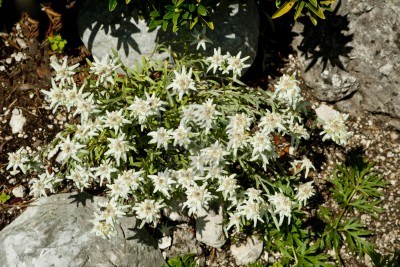
Edelweiss
Back in the 1960's &1970's when I was growing up rockeries were popular garden features. I remember them looking like burial mounds with chunks of stone sticking out and inexpertly filled with Aubretia and Alyssum. I thought they were awful then and still do today. They had smaller cousins caused by the modernising of kitchens; sink gardens. Beautiful old Butler of Belfast sinks were wrenched out of kithcens and left in gardens where enterprising gardeners would cover them with a mix of cement and compost to give a 'natural look' and then they were filled with an assortment of Sempervivums and Sedums and maybe a couple of rocks for good measure. The combination of these two ways of planting alpines put me off them for many years. However, spending time in the garden centre at work I have seen some very pretty and interesting plants labelled as Alpines. This has stirred my curiosity and opened my mind to a previously ignored area of the garden.


Sad Sink before I removed the  marigolds
When I wrote about containers I mentioned the old sink by the front door which hasn't  been very successful with traditional annuals. I have decided to empty it out and start again once any bulbs have finished flowering, assuming some have survived. It was this decision which made me think about trying out a few alpines. So off I went to the internet and Dr Hessayan's books to find out more. I needed to find out what planting medium they like, do they all like the blazing hot afternoon sun, can I have a set colour scheme or is it dictated by size and location. I have set myself quite a challenge.
My Friend Lithodora!
Once the sink has been emptied and cleaned out (at this stage it can be covered with a mix of cement and compost to make it look natural!!) I need to cover the plughole with fine mesh to stop slugs getting in, I shall also block the overflow which has been home to many small snails in the winter. I then need to add a layer of drainage material, gravel or stones. On top of that some people add a layer of rotted turf, some a mixture of charcoal and grit,  or leafmold  to act as a filter. Then comes the main growing mix of grit, peat, top soil, sharp sand – it seems every alpine grower has their own special formula. Some recommend using John Innes No2 instead of topsoil as it feeds the plants gradually. On top of this a layer of gravel is added, along with one or two rocks to break it up and house some crevice living plants.
Aquilegia flabellata

Iberis Little Gem
Plants need to be chosen carefully, many alpines spread from 12 to 18 inches which would soon swamp my little sink. I have found that in general Alpines are a very difficult bunch to keep happy; some like shade while others need full sun, some like to hide in crevices, some love acid soil, others love chalky soil, some are hardy whilst others are very tender. I found a website which listed dwarf varieties suited to sinks, I then needed to sort out which ones liked full sun and agreed with others about soil type.
Dianthus Evening Star
I have given up considering a colour theme, I shall just be glad if they all get on well together!

Erysimum Orange Flame
Despite this there still seems to be a wide variety to choose from; Aquilegia, Dianthus, Phlox and Saxifrage have an assortment of colours to choose from. Then there are Leontopdium (Edelweiss, not very imaginative I know but I am a beginner!); Iberis (Candytuft) Little Gem; Androsace (Rock Jasmine) Lanuginosa; Campanula Garganica;and Lithodora Olefolium. There is still a lot of research to be done here I think but ultimately what it will boil down to is what is available in the local garden centres. I shall keep you posted.......

Ooops! How did those three frozen fuchsias get into my luggage boot?! #PlantRescue!

Thursday, 17 January 2013

Snow Fuchsia In It


Whatever the Weather

I know I said I was going to write about Fuchsias this time but I got distracted by white fluffy things falling from the sky. Once we've all overcome our excitement about snow and the ensuing traffic chaos and learned to cope in freezing temperatures life will get back to normal just in time for a thaw to set in. As it took me three hours to get home yesterday I decided to take an ice day & stay safely at home today (Wednesday). The lane outside is like glass, as were the main roads yesterday afternoon. Temperatures dropped to -9 last night so I knew the roads were not going to be any better at the time I set off for work, even in Norfolk we have hills for people to get stuck on.
The ex-fruit cage
As it turned out to be a lovely sunny morning I took the camera out for a walk and called in down at the allotment. The snow was about 4”-6” deep and full of animal tracks. The onions I'd put in a couple of weeks ago were safe inside their cloche but the fruit cage has collapsed. I know I intended to replace the netting but now it will be tangled up with whatever plants are left inside. The reason for my visit was to fetch the wheelbarrow back for himself to use gritting the sliproad by the house. Mission accomplished.

Now, Back to the Fuchsias....

I cannot remember exactly when my passion for fuchsias began. As I have little recollection of lots of Fuchsias in gardens in Norwich I think it may have been when we moved from Norwich to the North Norfolk coast. Whenever it was once I was hooked there was no turning back. Fuchsias area a bit like Marmite – its either love or hate. As a fan of both Marmite and Fuchsia I cant see how you could possibly hate such versatile things! Fuchsias have everything to offer; a vast array of colours (with the exception of a true yellow variety); single, double or semi double flowers; sizes and growth habits to suit every garden, container or windowbox; can be grown as hedging, standards, trained up a trellis; come in tender, half hardy or fully hardy varieties available and to finish off they are exceedingly good value for money not only because garden centres usually sell them on multi buy offers but many of them have a very long flowering period.

In the UK there are 2000 varieties available (12000 worldwide). Unfortunately in most garden centres there are barely a dozen to choose from. Familiar names being Display, Dollar Princess, Swingtime, Genii, Beacon and Winston Churchill. Great excitement ensues when I come across something different in a local nursery. To find a wider variety a trip to a specialist nursery is needed, or a visit to an online supplier. Either of these places will open up a bewildering world of choices. Careful consideration needs to be given to where the fuchsias will be planted before visiting such a place otherwise you could end up buying far more than you have room for, and not the type you wanted. Even then strict boundaries will need to be observed – “I cannot spend more than £30 and I cannot buy more than 20 plants!”

In the greenhouse I have a tall fuchsia, a modern development created by people too lazy to train it into a proper standard! The top had been broken off so I rescued it with thoughts of turning it into a proper standard, training begins in the spring. Another popular trend is the 'climbing' fuchsia Lady Boothby (single flowered) or Lady in Black (double flowered). Some detractors say these are not proper climbers because they have no means to support themselves either with tendrils or stem roots, nor do they twine themselves around anything. Give them enough support and they will vigorously go skywards with the best true climbers. Perhaps one will be a candidate for the coal shed wall I mentioned last time.

I would very much like to grow a fuchsia hedge, maybe I can sneak it in the front garden by the fence, I have been wanting to break up the expanse of wood with some greenery. Having had a rummage on the internet I have decided to try and get several different Magellanica if I can hunt them down. There is already a rather sorry looking Molinae (Maiden's Blush) lurking near the corner of the decking which I shall try to rescue (attempting to propagate cuttings again). I would like to have M.Gracillis Variegata – with small, cream-edged leaves, long-narrow crimson and purple flowers; M.Aurea Golden Fuchsia has gold leaves on red stems, crimson and purple flowers; M.Versicolour is also variegated with small, grey-green leaves edged in cream, red and purple flowers. There is a lot of colour here so I think adding in a Molinae and a Hawkshead with their pale pink and white flowers will tone it down. That sounds like a lot of plants but it is a long garden – we have had three cars comfortably parked side by side in the past.

As well as the hedge I shall try out some different ones somewhere in the border. I have spotted Greyrigg a small hardy bush with delicate single flowers palest pink sepals, corolla palest blue. I also cant resist the rather odd looking Fuchsia Procumbens with its tube yellowish green, red at base and very short, sepals chocolate brown, no corolla, hardy.

Well with all this talk of Fuchsias I have left no room for my new venture. That will have to wait until next time

Thursday, 10 January 2013

Difficult Areas


Every garden has at least one difficult area. Whether it is too wet, shady, dry, sloping, odd shape it poses a problem as to what can be done with it. Eventually some resilient plants are found to fill the area and magically the problem area becomes a beautiful corner. It is finding the right plants to do the magic that stumps so many people, costing time, money and patience.

Ceanothus, Euonymous, Buddliea & Fuchsia
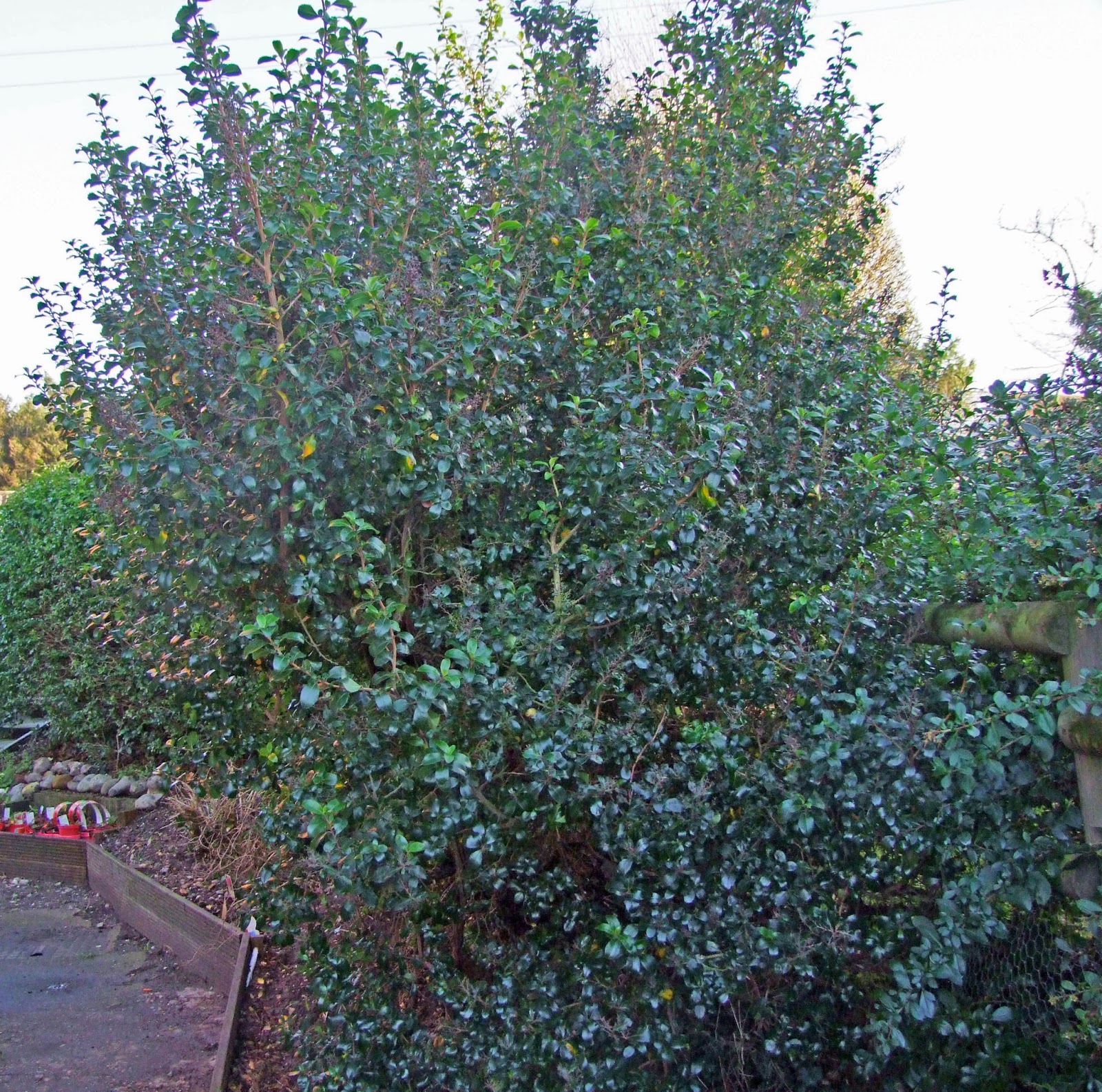
Large Escallonia Macrantha
In my garden there is a shady bank where mainly weeds grew and the soil was washed down by the rain all over the path, where more weeds then grew. The bank faces north but despite being overshadowed by bushes and buildings it catches the afternoon sun because it is open to the west. To start tackling this area weeds were repeatedly removed and various plants were put in with little success. Last autumn spare deck boards were used to shore up the edge and stop the soil erosion. This has created a good solid edge which I have put some fuchsias into, well they were homeless (honest!). This area already contains a very large Escallonia Macrantha and the stump of the White Cloud Buddleia which needed severely bringing into line because it tends to block the path (pruned by a chainsaw wielding friend). Last year I added some young foxgloves here and on the bank round the corner between the shed and steps. I also added a low growing Ceanothus (probably Thyrsiflorus Repens but it had no label) which I hope will get enough sun. I've also put in a Vinca Minor Aureovariegata and a Fuchsia Dollar Princess which was rescued from the compost at work in a very poor state. Already planted there, hidden among the weeds, I found a small Euonymus Japonicus Ovatus Aureus which I may well move to a sunnier spot because its variegated leaves are turning green, or I may just prune surrounding shrubs to let more light in. Hiding under the Escallonia is a very sad looking Weigela Florida Variegata, another candidate for moving to a better position. Moving these will leave a lot of exposed soil again so I've been looking at what may do well here. So far I am considering a border Saxifrage Umbrosa London Pride, which likes the shade, is evergreen and covers well. Another candidate is Tiarella Cardifolia (Foam Flower) it is evergreen and spreads well but only flowers in May and June. Solomon's Seal (Polygonatum) and Hostas are other options although they are not evergreen and very prone to slug attack. First I have to see how many bulbs I planted there last year (yes more compost refugees) I have rather lost track of where I planted them all! I also need to ask a certain tall person with a long reach hedge cutter to give the Escallonia and surrounding Privet a haircut soon.

By the Shed
Another difficult area, although not so large is the small bed between the shed and steps. Again I have put a load of rescued daffodils in here, there is also another Ceanothus and some foxgloves. They have ground elder, lesser bindweed, grass and elder to contend with. This patch is divided from the big bank by a large privet hedge, so access is needed to keep that down to a reasonable size too.

Three Fuchsias
Lastly there is the tiny bed by the coal shed wall. It's about a foot wide and seven feet long, faces due south but get overshadowed by the house in the afternoon. It gets a blast of morning sun until about lunchtime then its in deep shadow. It was once home to a large unwanted elder bush, which has been eradicated. Since then it has played host to various climbers and summer bedding plants, the Busy Lizzies particularly liked it a couple of summers ago. Last year I failed to grow canary creeper and violas but succeeded with three small pink Fuchsias (Fuchsia Hybrida Pink White) which kept flowering right up until December. If they survive and come back in the spring I will be pleased but like the ones in the Escallonia bed they were sold as annuals so I don’t hold out much hope. I need to fill in between them with some other annuals and find a suitable climber to cover the wall. I have tried clematis but it wasn’t shady enough for their roots, there isn’t a lot of soil to dig into. I may have a go with a Pyracantha instead, I'll get a small one and let it grow to fill the space.
Winter Fuchsia
 
Next time Fuchsia passion & trying something new!